
(The following biography is largely drawn from Professor Harry Prosen’s
Introduction to Jeremy Griffith’s 2016 summa masterpiece book,
FREEDOM: The End Of The Human Condition.)
Biographical Profile of Jeremy Griffith and
Background to Why The Human Condition is the
Most Contentious Yet Most Vital Area of Enquiry
‘In the whole of written history there are only two or three people who
have been able to think on this scale about the human condition.’
Prof. Anthony Barnett, zoologist, author and broadcaster, 1983
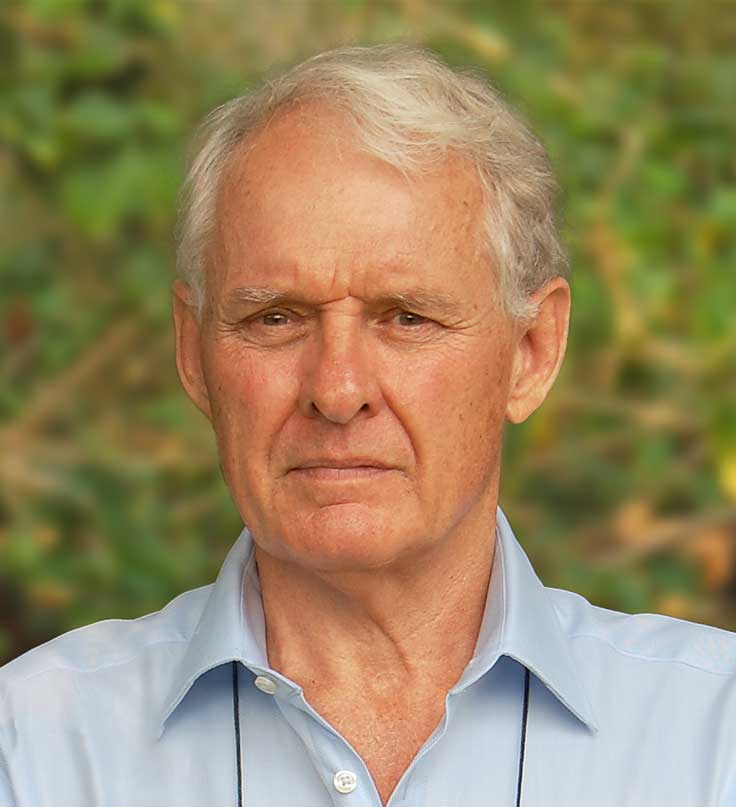
The Australian biologist Jeremy Griffith has dedicated his life to bringing fully accountable, biological explanation to the dilemma of the human condition—how do we explain our species’ extraordinary capacity for what has been called ‘good’ and ‘evil’. While it’s undeniable that humans are capable of great love and empathy, we also have an unspeakable history of greed, hatred, rape, torture, murder and war; a propensity for deeds so shocking and overwhelming that the eternal question of ‘Why?’ seems depressingly inexplicable. Even in our everyday behaviour, why, when the ideals of life are to be cooperative, selfless and loving, are we so ruthlessly competitive, selfish and aggressive that human life has become all but unbearable and our planet near destroyed? How could humans possibly be considered good when all the evidence seems to unequivocally indicate that we are a deeply flawed, bad, even ‘evil’ species? (For further description of what the human condition is, see Jeremy’s 2022 presentation The Great Guilt that causes the Deaf Effect, and FAQ 1.1.)
For most people, trying to think about this ultimate of questions of whether humans are fundamentally good or not has been an unbearably self-confronting exercise. Indeed, while the term ‘human condition’ has become fashionable, its superficial use masks just how profoundly unsettling a subject it really is. Again, the truth is the issue of the human condition has been so depressing for virtually all humans that only a rare few individuals in history have been sound and secure enough in self to go anywhere near what the human condition really is. (See Video/F. Essay 11 on the difficulty humans have had engaging with the subject of the human condition, including analysis of Plato’s cave allegory.) So for Jeremy to so freely and accurately talk about it as he does in FREEDOM, he clearly must be one of those rare few. Nurtured by a sheltered upbringing in the Australian ‘bush’ (countryside), Jeremy’s soundness and resulting extraordinary integrity and thus clarity of thought, coupled with his training in biology, has enabled him to successfully grapple with this most foreboding of all subjects for the human mind of the human condition and produce the breakthrough, human-behaviour-demystifying-and-ameliorating explanation of it.
10 minute video introducing Jeremy Griffith by Tim Macartney-Snape
(taken from part 2 of ‘2009 Introductory Video’)
Born on 1st December 1945 and raised on a sheep station (ranch) in rural New South Wales, Australia, Jeremy was educated at Geelong Grammar School in Victoria, a school whose visionary approach to education has produced such notable alumni as Rupert Murdoch and HRH King Charles III. He gained first class honours in biology in the state matriculation exams and in 1965 began a science degree at the University of New England in northern New South Wales. While there, Jeremy played representative rugby union football, making the 1966 trials for the national team, the Wallabies (see www.humancondition.com/jeremy-rugby).

Jeremy (centre) in training as a representative rugby union football player
Deferring his studies in 1967, Jeremy hitchhiked to Tasmania (with his dog Loaf), determined to save the Thylacine—the Tasmanian Tiger—from extinction. Setting off with only a trail bike to carry Loaf, his pack and himself, he began by searching all the remaining wilderness areas for evidence of the Tiger’s survival. The search was to last for more than six years—the most thorough investigation ever into the plight of the Tasmanian Tiger—and by its conclusion he and his co-worker James Malley had attracted significant support and a Thylacine Research Centre had been established. Bob Brown, who went on to develop the Australian Conservation Movement and become a Federal Member of Parliament, donated his time and income for a year to support the Centre, which had two field units in operation and camera monitors that Jeremy invented in all likely wilderness areas. Sadly Jeremy concluded the ‘Tiger’ was indeed extinct. His findings were internationally reported, with articles appearing in the American Museum of Natural History’s journal, Natural History, and Australian Geographic. His search also featured in an episode of the national television series A Big Country. In the official report of the search, Bob Brown said of Jeremy’s ‘Uncompromising drive’ to save the thylacine, that ‘the future ease with which anyone shall be able to assess the thylacine’s history and survival states in full and clear perspective will be due to him’. (To read the magazine articles and a more detailed account of the search, visit Jeremy Griffith’s Remarkable Search for the Tasmanian Tiger.)
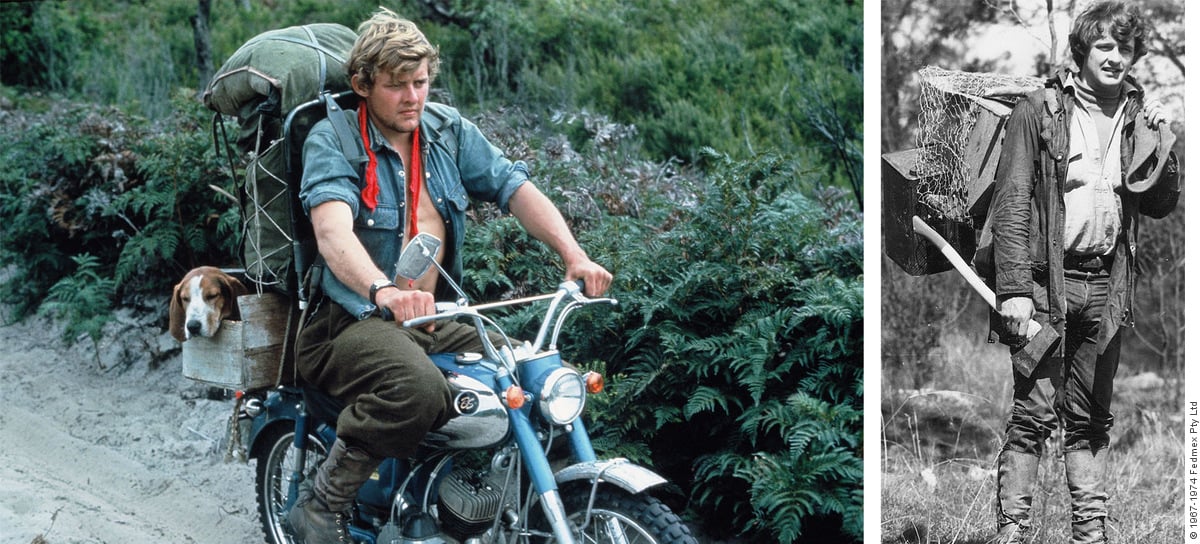
Setting off with nothing but his own enthusiasm, initiative and ingenuity—as these photos
illustrate—Jeremy tried to rediscover and save the Tiger from extinction. The right-hand
photo is of Jeremy carrying the ingredients to set up a trial camera monitor. He modified
cameras for this purpose, and he is credited with having pioneered the now widely
practised use of trail cameras to assess the presence or otherwise of threatened species.
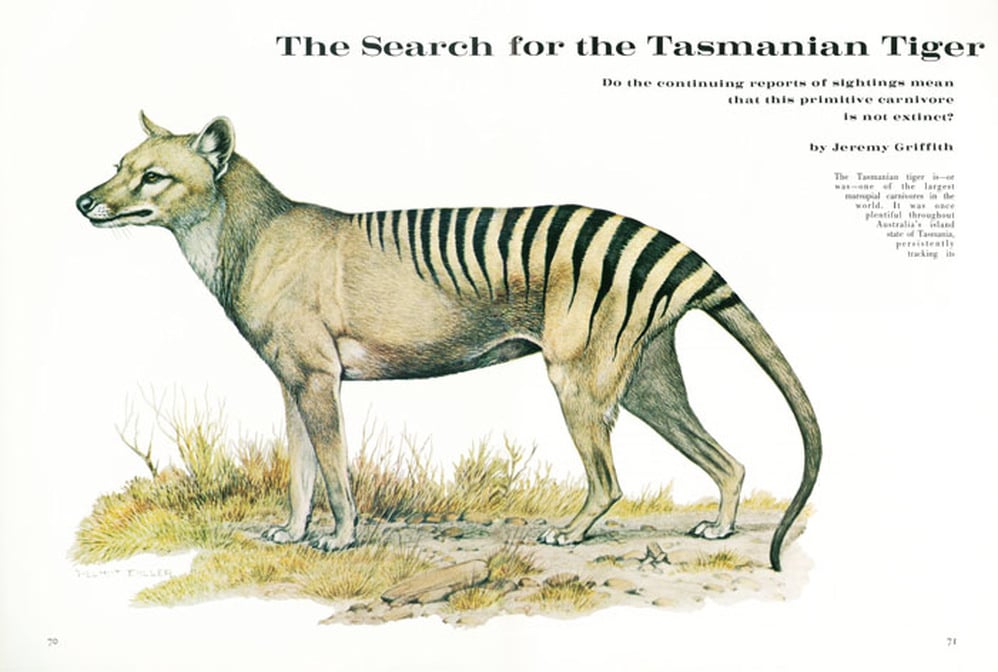
In December 1972, Natural History, the journal of the American Museum of Natural History,
published an article written by Jeremy about his search for the Tiger
In 1971 Jeremy completed his Bachelor of Science degree in zoology at the University of Sydney and the following year, in the same self-sufficient spirit with which he had undertaken the ‘Tiger’ search, he began manufacturing furniture to his own simple and natural designs. His idea was to make table tops from unadulterated bark-to-bark slabs of timber, which, like his use of trail cameras, is an idea he was a pioneer of in the world. So Jeremy hitchhiked to the north coast of NSW where such slabs were available. He made his first table top by carting a slab in a wheelbarrow four kilometres from the sawmill to a joinery where it could be planed. The business grew and in late 1973 he was joined by one of his brothers.
By 1976 they had saved enough to buy a 54 hectare property, on which they built an immense pole-framed workshop. Their unique furniture received much critical acclaim, including an article titled ‘Craft as a Successful Livelihood’ published in Craft Australia (1978). The highly successful furniture manufacturing business employed some 45 people and was a major tourist attraction when, in 1991 Jeremy sold his share in the business. (Read more about Jeremy Griffith’s Tablecraft furniture.)



© 1990 Fedmex Pty Ltd
Advertisements for Jeremy’s furniture from 1990 Australian home decorating magazines.
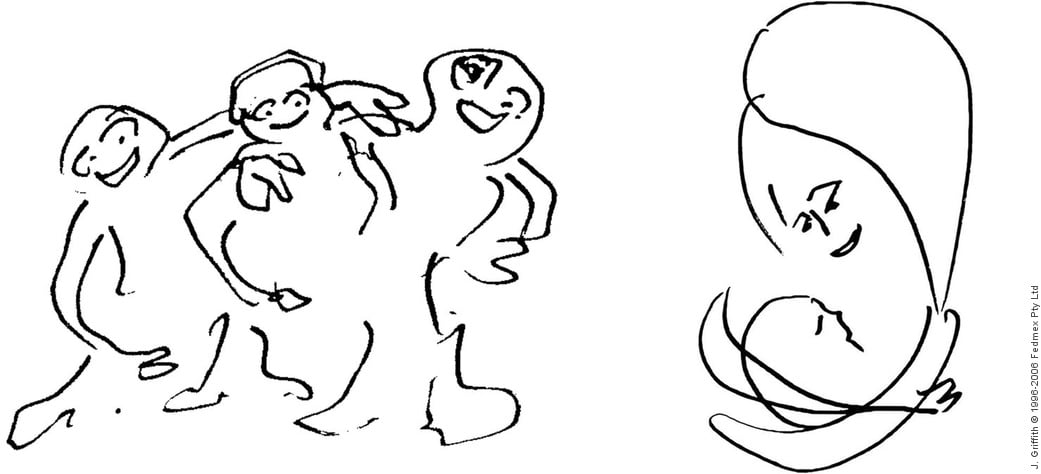
The creativity Jeremy expressed in his natural furniture designs has been a hallmark of his entire life. Jeremy is an accomplished artist and on the rare occasions he is not working, Jeremy is thinking about a human-condition-free future for the human race, or creating useful tools for, and beautiful unpretentious, natural works of art to adorn, that wonderful new world. (Read more about Jeremy Griffith’s artwork.)
J. Griffith © 1996-2006 Fedmex Pty Ltd
These are two of the many instinctive line drawings Jeremy uses throughout
FREEDOM: The End Of The Human Condition and his other books.
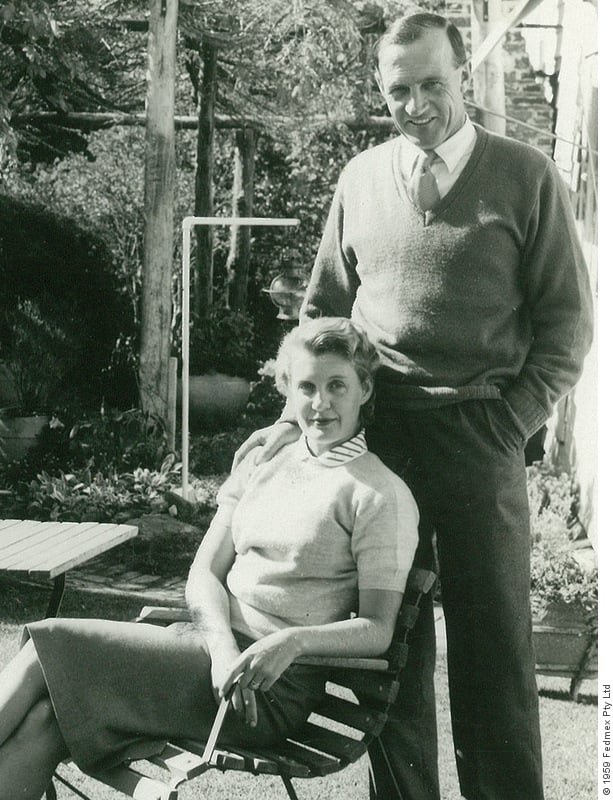
Jeremy’s parents Jill and Norman Griffith at their sheep station in Central NSW in 1959
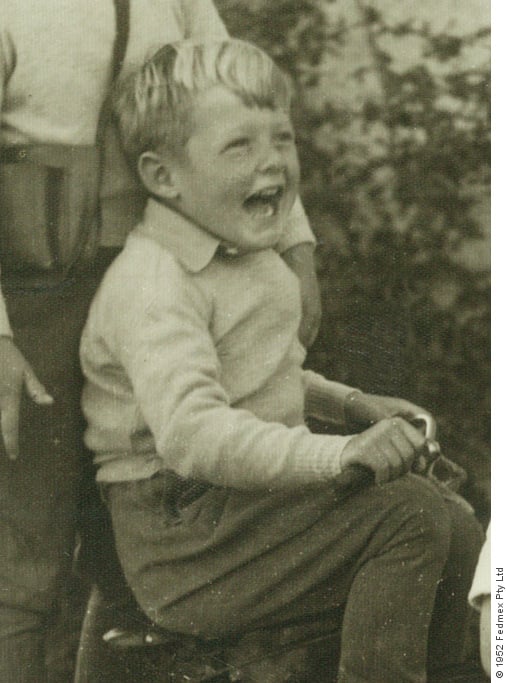
Jeremy aged 6 (1952)
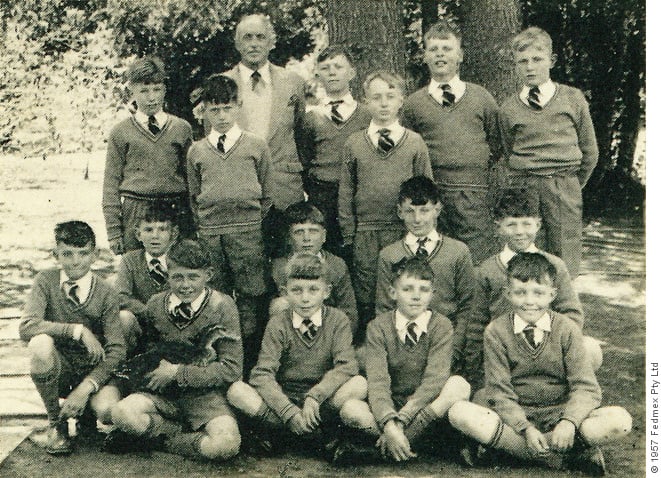
Jeremy aged 11 (with duck in front row) when he
was captain of the Bird Watching Club at Tudor
House boarding school at Moss Vale, NSW (1957)
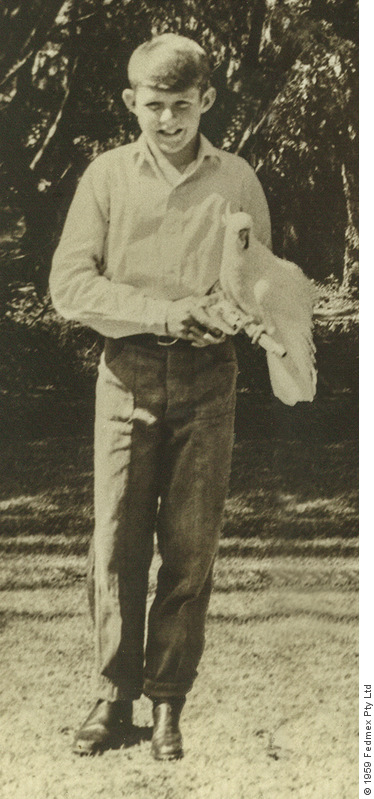
Jeremy aged 13 with his pet cockatoo (1959)
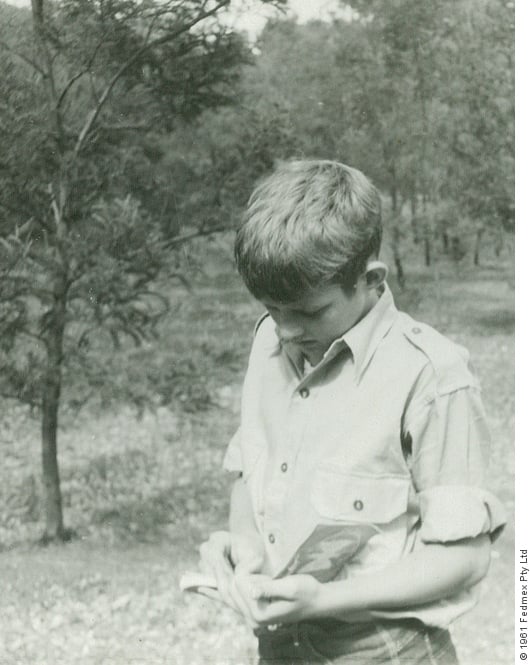
Jeremy aged 15 recording bird sightings at Geelong Grammar School Timbertop campus, where he won the Natural History Prize and was runner up for Best Boy of the Year (1961)
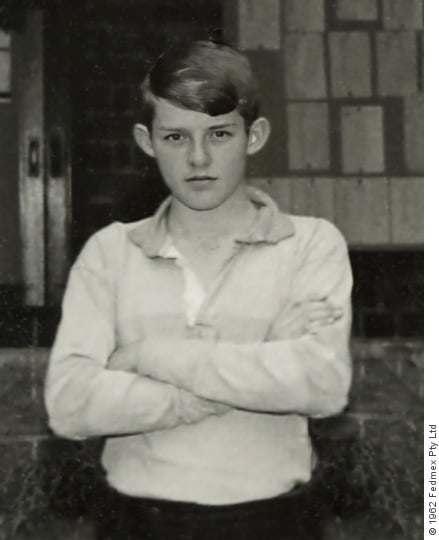
Jeremy aged 16 in the GGS
1962 First XV rugby union
team photo
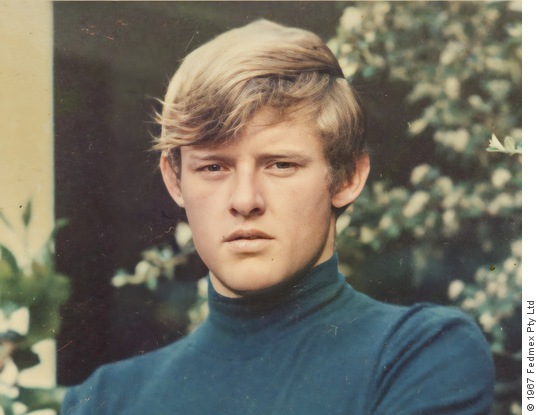
Jeremy in Dec. 1967 on his 22nd
birthday, the day before setting off
for Tasmania to commence his
Tiger search.
An upbringing nurtured with real, unconditional love (it is to the nurturing from Jeremy’s mother, and to the good fortune of having a father who was not oppressively egocentric, that we really owe these world-saving insights) in the sheltered isolation of the Australian bush left Jeremy deeply troubled and perplexed by all the selfishness, aggression, dishonesty and indifference on the one hand, and all the suffering on the other, that he inevitably encountered in the innocence-destroyed, human-condition-embattled, psychotic wider world. In time, he realised that trying to save animals from extinction or trying to build ideal furniture wasn’t going to make a difference to the extraordinary imperfection in human life and that he would have to get to the bottom of the issue of this seeming complete wrongness of human behaviour, which is the issue of the human condition. And so it was while building his furniture business that Jeremy first began to write down his ever developing thoughts about the problem of the human condition. Indeed, since the early 1970s Jeremy has spent the first, often pre-dawn, hours of each day thinking and writing about the human condition. After some 10 years of extraordinarily profound, honest, human-condition-confronting-not-avoiding, effective thinking during his late 20s and early 30s, Jeremy was ready to present to the world his fully accountable, but, for virtually everyone else, unbearably self-confronting insights into human behaviour. It was an amazing decade of clear thinking, confirming Einstein’s belief that ‘a person who has not made his great contribution to science before the age of 30 will never do so’ (Selig Brodetsky, ‘Newton: Scientist and Man’, Nature, 1942, Vol.150).
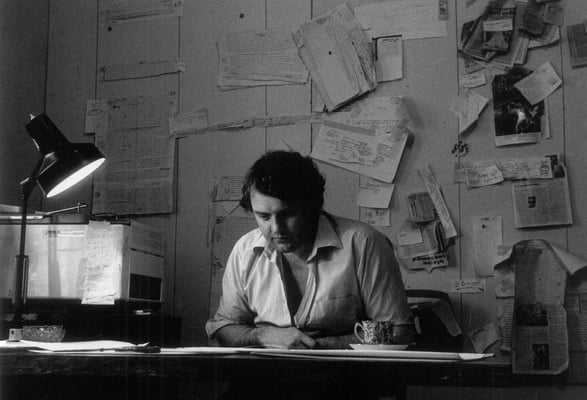
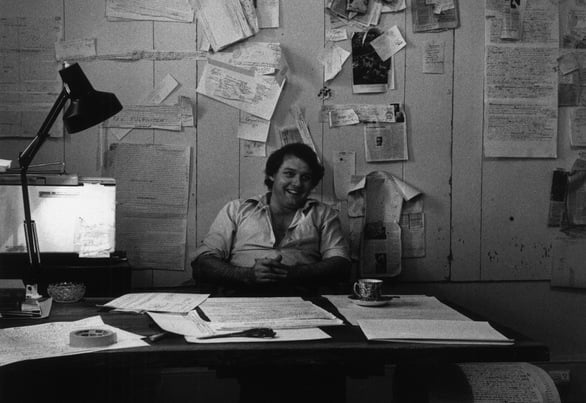
Jeremy at his writing desk in Surry Hills,
Sydney in 1982 where he did a great deal of
his fundamental thinking about the human
condition. He also lived and maintained a
showroom for his furniture business there.
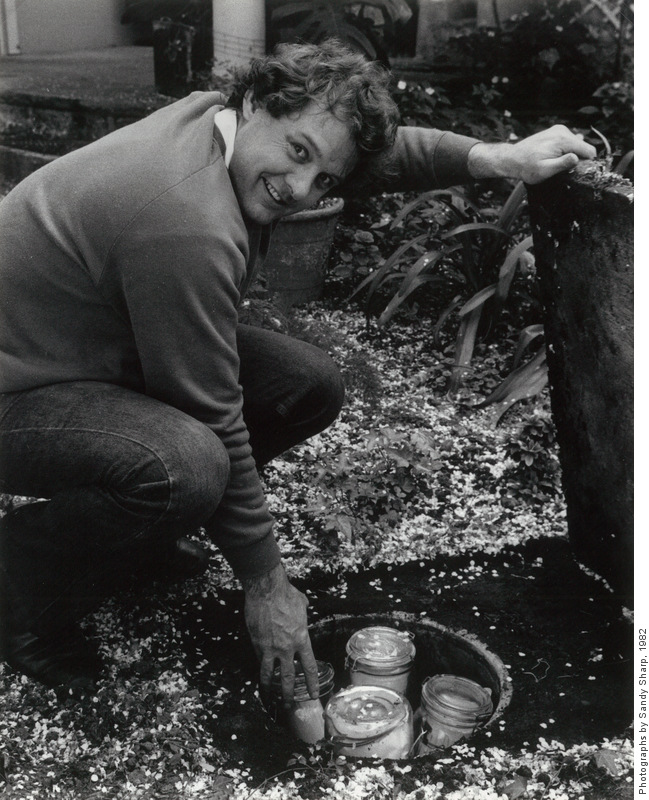
Jeremy knew his writing to be so precious that
he dug a pit in the backyard at Surry Hills and
put copies of his manuscripts in large glass
sealed preservative jars in the pit covered over
with a paving stone to protect them.
However, since producing his all-explaining synthesis, the problem Jeremy has encountered has been how to present it in such a way that people could access its confronting truthfulness; it’s all very well to find the redeeming, reconciling full truth about humans, but when everyone has been living in determined denial of all the elements that comprise that compassionate full truth, how do you get them to overcome that denial and hear it? That very great philosopher, Plato, said that when the ‘cave’ ‘prisoners’ are ‘free[d] of their bonds’ they ‘would be so overwhelmed by the brightness of’ the ‘light’ of understanding of ‘our human condition’ that ‘at first’ they ‘wouldn’t be able to see a single one of the things’ revealed as ‘real’. (See Video/F. Essay 11.) It is Jeremy’s journey to find a way to overcome this ‘deaf effect’ difficulty that reading about the human condition initially causes that has led to his presentation of his synthesis in FREEDOM. His strategy in FREEDOM is to encourage readers to watch introductory videos to FREEDOM at www.humancondition.com/wtm-videos, and also be prepared to patiently re-read the text, so you can, as Plato said, ‘grow accustomed to the light’. Of course, this strategy was arrived at after much trial and error—over 30 years, in fact, of presenting his synthesis in slightly different ways in a series of articles and books, beginning in 1983 with submissions to Nature and New Scientist (which were rejected, with the then editor of Nature, John Maddox, telling Jeremy that his starting point teleological argument that there is an underlying order in nature ‘is wrong’—Jeremy explains why the truth of the order in nature has been denied by human-condition-avoiding, mechanistic science in F. Essay 25 and chapter 4 of FREEDOM); then, in 1988, Free: The End Of The Human Condition; Beyond The Human Condition (1991); A Species In Denial (2003), which was a bestseller in Australia and New Zealand but still failed to attract any real interest from the mechanistic scientific establishment; The Human Condition Documentary Proposal (2004); The Great Exodus: From the horror and darkness of the human condition (2006); Freedom Expanded (2009); The Book of Real Answers to Everything! (2011); and in 2016, his summa masterpiece book, FREEDOM: The End Of The Human Condition, and its condensation, Transform Your Life And Save The World. In 2017, Jeremy commenced work on the Freedom Essay Series, an ongoing collection of essays (and videos) designed to help WTM subscribers access all the main subjects covered in FREEDOM in wonderfully illustrated bite-sized portions. In 2020 he wrote How Laurens Van Der Post Saved The World, and presented the one-hour video explanation of the human condition, the transcript of which is provided in the booklet, THE Interview. Since Critical Theory wasn’t taking hold in society when FREEDOM was published, in 2021 Jeremy wrote Death by Dogma as a companion book for both FREEDOM and THE Interview to explain the extreme danger Marxist Critical Theory presents. In 2022 Jeremy made two important video presentations, the transcripts of which are provided in the booklets The Great Guilt that causes the Deaf Effect and The Shock Of Change that understanding the human condition brings. In 2023, Jeremy and others made the video presentation and subsequent book, The Great Transformation: How understanding the human condition actually transforms the human race; Jeremy also began work on Therapy For The Human Condition, as well as Our Meaning: How being able to know and fulfil the great objective and meaning of human existence finally ends human suffering, both of which are being made available as each section is written. (All published works are freely available on the WTM’s homepage to be read or printed.)
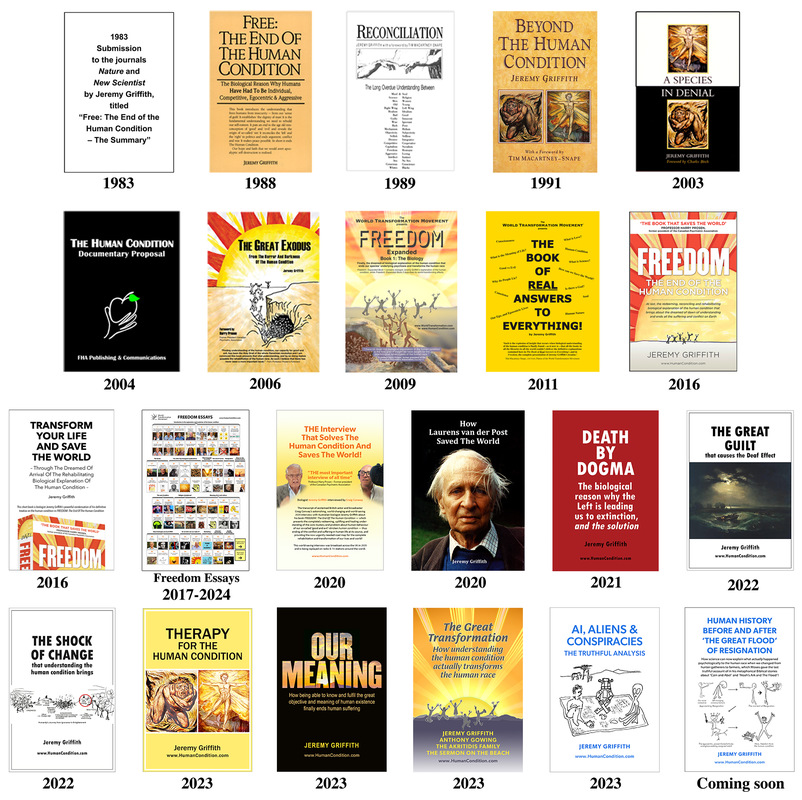
Published writings by Jeremy Griffith
(All these publications are freely available on the WTM website to be read or printed.)
The great influences in Jeremy’s thinking about the human condition has first and foremost been the unconditional love from his mother and father during his upbringing, which Jeremy describes at some length in How Laurens Van Der Post Saved The World. That book also presents a detailed account of how the writings of Sir Laurens van der Post about the relatively innocent Bushmen or San people of the Kalahari played a very significant role in confirming Jeremy’s denial-free thinking about the original innocence of the human race. In essays about Sir James Darling, Jeremy’s headmaster when he was at Geelong Grammar School, Jeremy also describes how Sir James’s extraordinary Platonic approach to education played a crucial role in preserving his innocence and thus capacity to think truthfully about the human condition. The relatively honest thinking of Professor Charles Birch, the head of the biology department when Jeremy was studying biology at Sydney University, also helped Jeremy hold on to his denial-free, truthful thinking about the human condition. The fellowship and support that Jeremy has had from Professor Harry Prosen prior to and following Dr Prosen coming to Australia from America to defend Jeremy’s treatise on the human condition at Jeremy’s successful defamation trial in 2007 has also played a crucial role in helping Jeremy hold on to his honest, denial-free way of thinking. Professor Prosen wrote the Introduction to Jeremy’s book FREEDOM (again, from which this biography is largely drawn) where he talks at some length about Jeremy’s extraordinary capacity to think honestly.
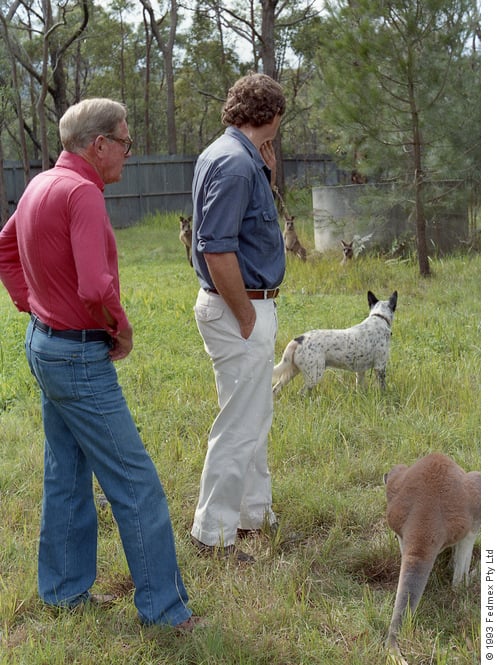
Jeremy Griffith showing Professor Birch the
pet kangaroos at one of the WTM offices when
Birch visited the WTM to give the main
address at the 1993 WTM Open Day.
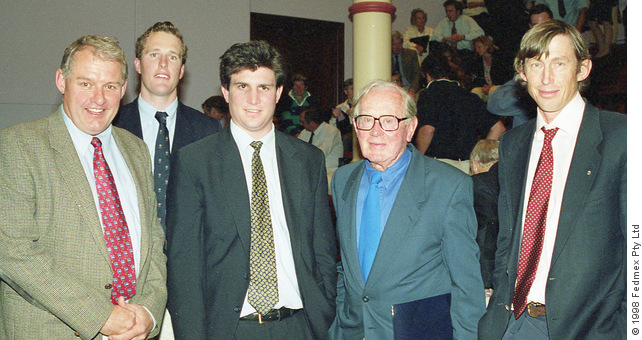
Professor Birch launching the
WTM’s website at the Australian Museum on
16 October 1998. (L to R): Jeremy Griffith,
Sam Belfield, John Biggs, Professor Charles
Birch and Tim Macartney-Snape.
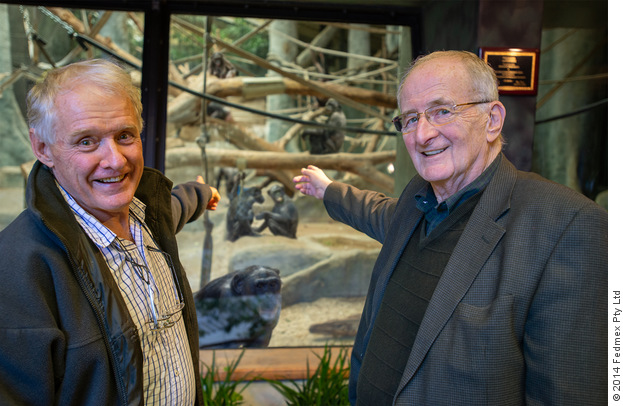
Jeremy Griffith (left) and Harry in front of the
Milwaukee County Zoo bonobo exhibit in 2014.
As a psychiatrist for animals as well as humans,
Harry served as the psychiatric consultant to the
Bonobo Species Preservation Society and is
particularly famous for his rehabilitation of the
bonobo Brian. Harry heartbreakingly
passed away in June 2021 at the age of 90.
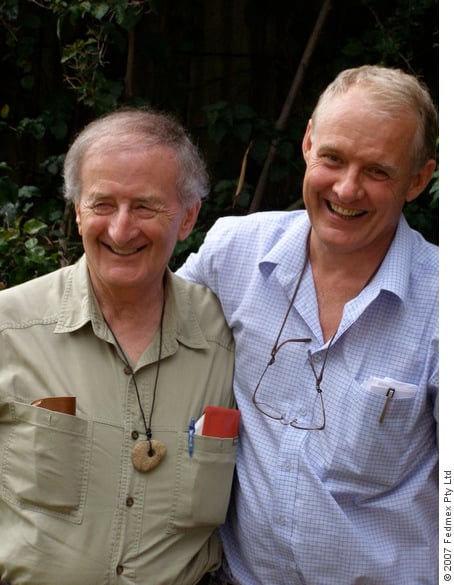
Professor Prosen (left) with Jeremy Griffith in Sydney,
2007. Harry has a shaman stone around his neck that
was given to him by an Inuit holy man, basically
because he experienced Harry’s extraordinary capacity for empathy, an empathy that no doubt was the basis of
Harry’s exceptionally gifted career as a psychiatrist.
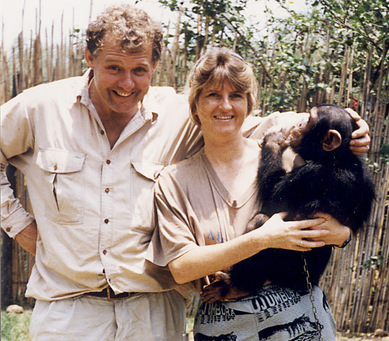
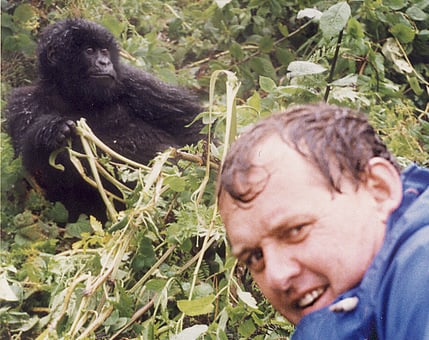
In 1992, Jeremy visited Africa as part of the international launch of Beyond The Human Condition, and whilst there he was invited to visit a number of primate field studies in Kenya and Burundi where he was able to gain first-hand observations of the behaviour of several primate species.
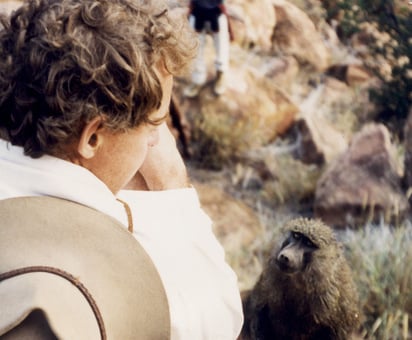
© 1992 Fedmex Pty Ltd
Photos from Jeremy Griffith’s 1992 visit to Africa. Above L to R: Jeremy with Dr Shirley Strum’s Chololo
Ranch Baboon Project study group in Kenya; Jeremy with Dr Susanne Abildgaard and a chimpanzee at Jane
Goodall’s Chimpanzee Rehabilitation Centre in Burundi; Jeremy with the Susa Mountain Gorilla study
group in Rwanda. Jeremy met with the carer of this troop, Dr Elizabeth Macfie, veterinarian for Dian
Fossey’s Karisoke Gorilla Research Centre.
Jeremy’s books have attracted the support of such accomplished thinkers as the aforementioned Professor Charles Birch, a Templeton Prize-winning biologist, Professor Harry Prosen, a former President of the Canadian Psychiatric Association, the esteemed ecologist Professor Stuart Hurlbert from the United States, and the pre-eminent philosopher Sir Laurens van der Post, as well as Professor John Morton, one of New Zealand’s foremost zoologists. The proposal to make a documentary about the human condition (The Human Condition Documentary Proposal), in which Jeremy outlined all the main biological explanations contained in his synthesis, also received over 100 endorsements from many of the world’s leading scientists and thinkers, including professors Stephen Hawking and the Nobel Laureate Charles H. Townes (see www.humancondition.com/doco-responses).

Photograph taken in London in 1993 of the World Transformation Movement Patrons,
Jeremy Griffith and Tim Macartney-Snape AM OAM, with the late Sir Laurens van der Post,
the pre-eminent philosopher whose writings about the Bushmen of the Kalahari and
about the human condition were of crucial assistance in confirming Jeremy’s instinctive
belief that humans’ distant ancestors were cooperative and loving, and in confirming
so many of the other thoughts Jeremy has had about the human condition. As Jeremy
says in F. Essay 51 and paragraph 1282 of FREEDOM, Sir Laurens “prepared the way”
for FREEDOM, and he is the most quoted author in it.
But while Jeremy’s work has drawn praise and garnered impressive commendations from some exceptional thinkers able to acknowledge his insights, he has also had to withstand the enormous cynicism, indifference and even persecution that humans’ historical resistance to engaging the subject of the human condition produces. Indeed, it was soon after he began writing that Jeremy realised that not only was the scientific establishment failing its responsibility to address the issue of the human condition, but that, like the rest of humanity, it was treating the whole issue as an anathema (see F. Essay 40). As a result, Jeremy established, in 1983, a non-profit organisation dedicated to the study and amelioration of the human condition, now called the World Transformation Movement (WTM) (www.humancondition.com/about-the-world-transformation-movement). So fearful, however, has humanity been of the issue of the human condition that a vicious campaign was launched in 1995 to try to shut down Jeremy’s work and bring the WTM into disrepute (see F. Essay 56: Why there have been ferocious attacks on the WTM, and the essay Persecution of the WTM for Exposing the Human Condition at www.humancondition.com/persecution), which Jeremy, along with fellow WTM Patron, renowned mountaineer and twice-honoured Order of Australia recipient Tim Macartney-Snape and the other supporters of the WTM, determinedly resisted—the result of which was the then biggest defamation case in Australia’s history, against the two biggest, left-wing (described by Jeremy as dogmatic, pseudo idealistic, ‘let’s pretend there’s no human condition that has to be solved and the world should just be ideal’, dishonest) media organisations in Australia, including its national public broadcaster. As will be explained more fully below, in 2010, after 15 long years, Jeremy and Tim were vindicated, enabling Jeremy to concentrate solely on producing new works such as FREEDOM: The End Of The Human Condition, his summa masterpiece.
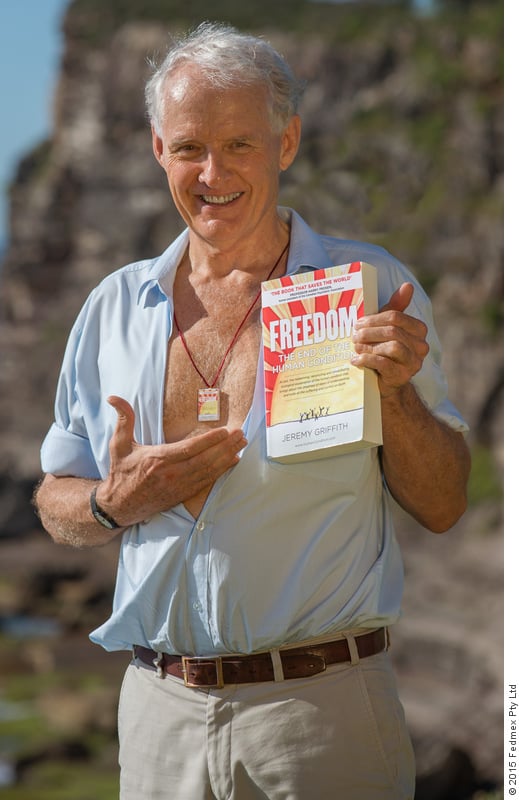
Jeremy in 2015 with the WTM ‘if-we-look-after-this-information-it-will-look-after-each-of-us-and-the-world’ (see par. 1191 of FREEDOM) pendant. The pendant can be purchased from WTM Products.
Jeremy and his long-time partner, Annie Williams, live in Sydney. (To learn more about the WTM and Jeremy’s role as its founder and a patron, see www.humancondition.com/history-of-the-wtm).

Annie Williams and Jeremy Griffith in 1993.
View Annie’s inspiring 2010 Transformation Affirmation at www.humancondition.com/annie-williams-affirmation.
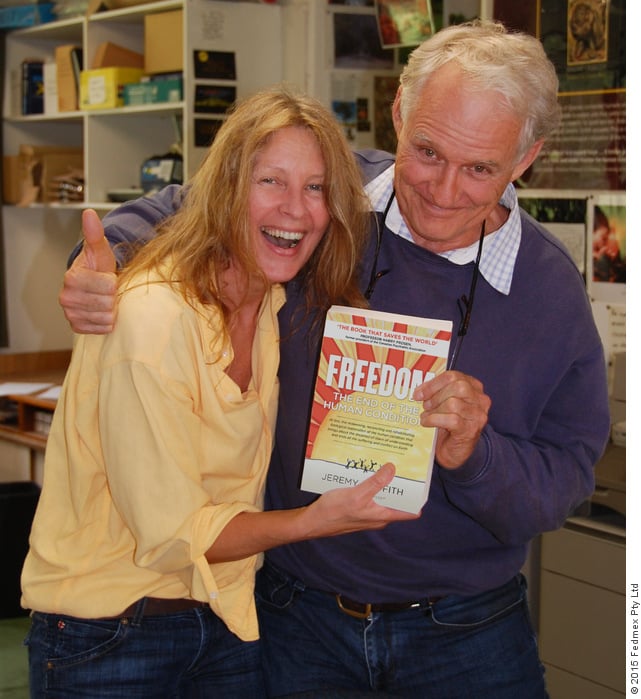
Annie and Jeremy holding a ‘hot off the press’ copy of FREEDOM prior to its 2016 launch
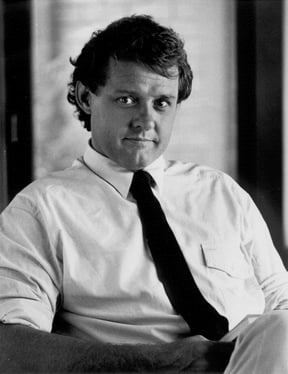
Jeremy in 1988
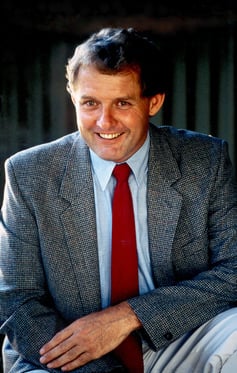
In 1993
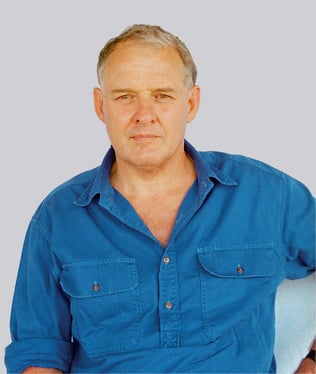
In 2003
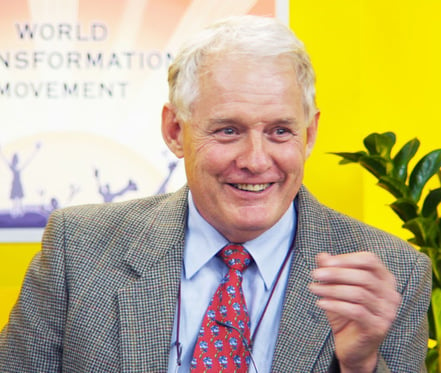
In 2009
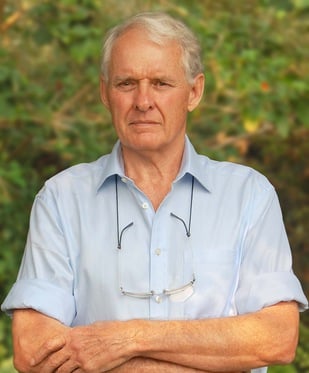
In 2013

In 2020
______________________
The following quotes and references provide a deadly accurate account of how humans have had to live in denial of the depressing subject of the human condition, and how the severity of this denial has prevented effective analysis of the human condition and delayed the acceptance of Jeremy’s insight into it.
Despite the biologist E.O. Wilson, in his 2012 book The Social Conquest of Earth, evasively dismissing and trivialising the human condition as nothing more than selfless instincts at odds with selfish instincts within us, the human condition is actually such a terrifying subject for most humans (including the scientific fraternity) that they have had virtually no choice but to live in almost complete denial of it—yes, ours has been a culture of such pervasive dishonesty that it became nearly impossible to unearth the real, human-race-liberating, biological explanation of the human condition. Indeed, the most famous account ever given of the human condition forms the centrepiece of Plato’s most acclaimed work, The Republic, where humans are metaphorically depicted living as prisoners in a dark cave, deep underground, so fearful are they of the issue of the imperfection of their lives that the sun has the power to reveal. As Plato wrote, ‘I want you to go on to picture the enlightenment or ignorance of our human conditions somewhat as follows. Imagine an underground chamber, like a cave with an entrance open to the daylight and running a long way underground. In this chamber are men who have been prisoners there’ (c.360BC; tr. H.D.P. Lee, 1955, p.278 of 405). Plato described how the cave’s exit is blocked by a ‘fire’ that ‘corresponds to the power of the sun’ (p.282), which the cave prisoners have to hide from because its ‘painful’ light would make ‘visible’ the unbearably depressing issue of ‘the imperfections of human life’ (p.282).
In terms of how unbearably confronting—in fact, suicidally depressing—the issue of the human condition has been, the great philosopher Søren Kierkegaard is said to have given the best account of that worse-than-death experience, writing in his aptly titled 1849 book The Sickness Unto Death that ‘the torment of despair is precisely the inability to die [and end the torture of our unexplained human condition]…that despair is the sickness unto death, this tormenting contradiction [of our ‘good-and-evil’-human-condition-afflicted lives], this sickness in the self; eternally to die, to die and yet not to die’ (tr. A. Hannay, 1989, p.48 of 179). The famous psychoanalyst Carl Jung provided an equally stark description of the terrifying nature of the human condition when he wrote: ‘When it [our shadow] appears…it is quite within the bounds of possibility for a man to recognize the relative evil of his nature, but it is a rare and shattering experience for him to gaze into the face of absolute evil’ (Aion: Researches into the Phenomenology of the Self, 1959; tr. R. Hull, The Collected Works of C.G. Jung, Vol. 9/2, p.10). The ‘face of absolute evil’ is the ‘shattering’ possibility—if humans allow their minds to think about it—that they might indeed be a terrible mistake. (Read more about the terrifying nature of the human condition in The Great Guilt that causes the Deaf Effect.)
It follows then that to confront the human condition is an impossible ask for most people—as another great philosopher, Nikolai Berdyaev, acknowledged: ‘Knowledge requires great daring. It means victory over ancient, primeval terror…it must also be said of knowledge that it is bitter, and there is no escaping that bitterness…Particularly bitter is moral knowledge, the knowledge of good and evil. But the bitterness is due to the fallen state of the world…There is a deadly pain in the very distinction of good and evil, of the valuable and the worthless’ (The Destiny of Man, 1931; tr. N. Duddington, 1960, pp.14–15 of 310). Yes, trying to think about our corrupted, ‘fallen’, seemingly ‘evil’ and ‘worthless’ human-condition-afflicted state has been an ‘ancient, primeval terror’, a ‘deadly pain’, ‘the bitterest thing in the world’ for virtually all humans—‘knowledge of good and evil’, of the human condition, ‘requires great daring’. No wonder the Australian zoologist, author and broadcaster, Anthony Barnett, said to Jeremy back in 1983 that ‘you are being very arrogant to think you can answer questions on this scale. In the whole of written history there are only two or three people who have been able to think on this scale about the human condition’ (in a recorded interview with Jeremy Griffith, 15 Jan. 1983).
So, how has science, humanity’s designated vehicle for finding understanding, dealt with the human condition, given it is practised by humans who have had no choice but to live in a cave-like state of complete denial of the suicidally depressing subject? The answer is that science has avoided it—it has been mechanistic and reductionist, focused on the details, avoiding the whole view that involves confronting the human condition. (Read more about how science has coped with the human condition in chapter 2:4 of FREEDOM.)
It is perhaps not surprising then that Jeremy’s work of bringing understanding to the human condition has been viciously persecuted by both the human-condition-avoiding community and the mechanistic scientific establishment—a problem that Plato also anticipated; to quote from a summary of Plato’s cave allegory from the Encarta Encyclopaedia: ‘Breaking free, one of the individuals escapes from the cave into the light of day. With the aid of the sun [living free of denial of the human condition], that person sees for the first time the real world and returns to the cave with the message that the only things they have seen heretofore are shadows and appearances and that the real world awaits them if they are willing to struggle free of their bonds. The shadowy environment of the cave symbolizes for Plato the physical world of [false] appearances. Escape into the sun-filled setting outside the cave symbolizes the transition to the real world’ (written by Prof. Robert M. Baird, accessed Jul. 2008, see: <www.wtmsources.com/101>). To return to Plato’s own words, ‘if he [the cave prisoner] were forcibly dragged up the steep and rocky ascent [out of the cave] and not let go till he had been dragged out into the sunlight [shown the truthful but at the same time exposing explanation of the human condition], the process would be a painful one, to which he would much object, and when he emerged into the light his eyes would be so overwhelmed by the brightness of it that he wouldn’t be able to see a single one of the things he was now told were real [this ‘deaf effect’ inability to absorb discussion of the human condition is what people often experience when they first try to read analysis of the human condition, which readers of Jeremy’s books should be warned about]’ (The Republic, p.280). Plato didn’t stop there, going on to say, ‘they would say that his [the person who tries to deliver understanding of the human condition] visit to the upper world had ruined his sight [they would treat him as if he was mad], and that the ascent [out of the cave] was not worth even attempting. And if anyone tried to release them and lead them up, they would kill him if they could lay hands on him’ (p.281). Yes, as psychologists recognise, ‘denials…fight back with a vengeance when faced with annihilation’ (Courage to Heal, L. Davis & E. Bass, 1988, p.175 of 495).
Of course, in today’s civilised world more subtle means of eliminating threats to the mechanistic, human-condition-avoiding, denial-based ‘cave existence’ were employed in the campaign of persecution against Jeremy for being the person who ‘escapes from the cave into the light of day’ and then ‘dragged [humanity] out into the sunlight’. This persecution was the focal point of the aforementioned legal battle undertaken to defend Jeremy’s work, in which the three judges in the New South Wales Court of Appeal unanimously found that an earlier ruling in a lower court did ‘not adequately consider’ ‘the nature and scale of its subject matter’, in particular ‘that the work was a grand narrative explanation from a holistic approach, involving teleological elements’, and other important submissions ‘were not adequately considered by the primary judge’ including that the work can make ‘those who take the trouble to grapple with it uncomfortable’ because it ‘involves reflections on subject-matter including the purpose of human existence which may, of its nature, cause an adverse reaction as it touches upon issues which some would regard as threatening to their ideals, values or even world views’! (See details of the persecution and court case, including this ruling.)
Jeremy’s journey in bringing understanding to the human condition and protecting the integrity of that explanation—a 40 year saga—has certainly been a long and torturous one (indeed, the persecution was so terrible it left Jeremy seriously debilitated with Chronic Fatigue Syndrome from 1999 to 2009), but bringing understanding to the human condition is the only rational path forward for the human race! Indeed, with the world in such crisis and in desperate need of the all-clarifying, redeeming and ameliorating understanding of all our lives, in December 2012 an American billionaire pledged $200 million to Columbia University’s ‘accomplished scholars whose collective mission is both greater understanding of the human condition and the discovery of new cures for human suffering’ (The Educated Observer, Winter 2013); and, on 2 April 2013, the President of the United States, Barack Obama, announced a ‘Brain Initiative’, giving ‘$100 million initial funding’ (The Sydney Morning Herald, 4 Apr. 2013) to mechanistic science to also find ‘the underlying causes of…neurological and psychiatric conditions’ afflicting humans (US National Institutes of Health, accessed Apr. 2013 at: <http://www.nih.gov/science/brain/>); and, on 28 January 2013, the European Commission announced the launch of the ‘Human Brain Project with a 2013 budget of €54 million (US$69 million)’ with a ‘projected billion-euro funding over the next ten years’ (Alison Abbott, ‘Neuroscience: Solving the brain’, Nature, 2013, Vol.499, No.7458) with the goal of providing ‘a new understanding of the human brain and its diseases’ (Press Release, The Human Brain Project, 28 Jan. 2013; accessed Jul. 2013, see: <www.wtmsources.com/111>) to ‘offer solutions to tackling conditions such as depression’ (Barry Neild, ‘Scientists to simulate human brain inside a supercomputer’, CNN International Edition, 12 Oct. 2012; accessed Jul. 2013 at: <http://edition.cnn.com/2012/10/12/tech/human-brain-computer>). But establishing a centre to study the human condition is precisely the initiative Jeremy took back in 1983 when he created the self-funded WTM (an act of prescience that evidences his clarity and integrity of thought)—an institute that even has the domain name ‘humancondition.com’! And while these recently announced initiatives are admirable in their quest to seek understanding of the human condition, they are doing so from the traditional human-condition-avoiding position, which is basically self-defeating, as opposed to the human-condition-confronting position from which Jeremy has already explained it—and yet it is his approach that has been treated as heretical, an anathema and a threat by the mechanistic scientific establishment!!
The sincere hope, however, is that with our species’ predicament now so dire, the scientific establishment will finally acknowledge and support Jeremy’s human-race-saving insight into the human condition. After all, given how unconfrontable the human condition has been, how could Jeremy talk about the subject as freely and accurately as he does if he hadn’t been able to look into it and find the explanation for it?
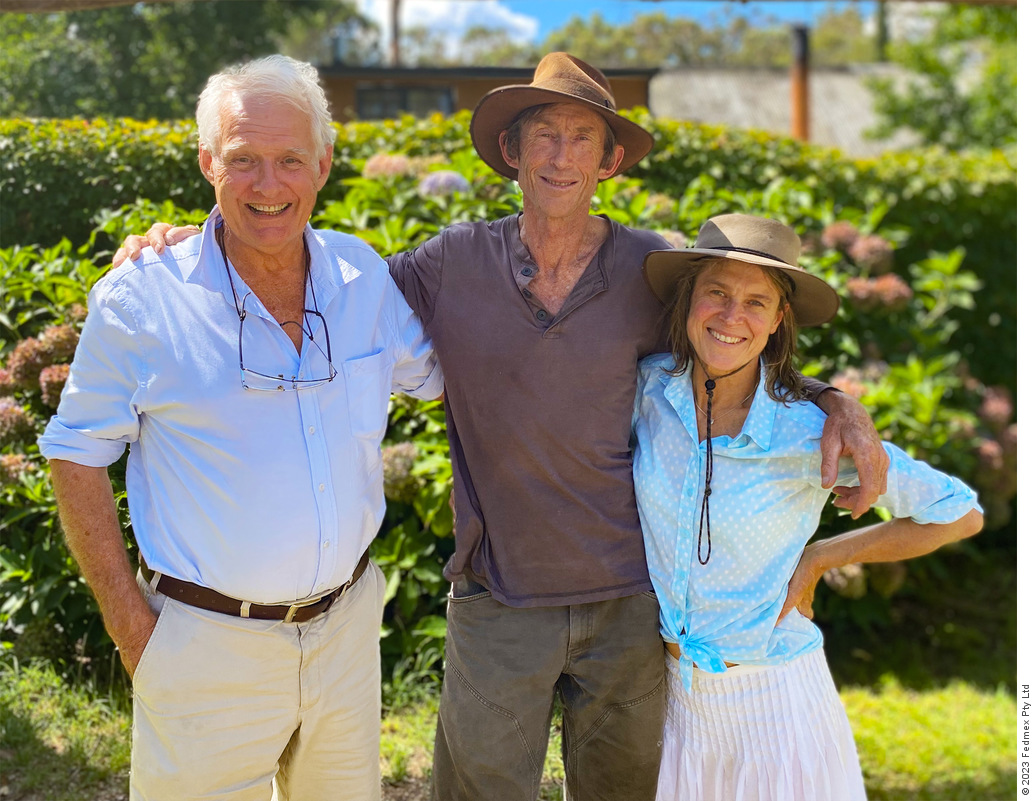
Jeremy in 2023 with his great friend and fellow WTM Patron
Tim Macartney-Snape and Tim’s partner Stacy Rodger
For more insights into Jeremy Griffith’s ability to grapple with
and solve the human condition, see Freedom Essays 49 to 51.